EDMONTON – In the wake of new provincial restrictions and mere days before a vaccine passport-like system is implemented in Alberta, entrepreneurs are figuring how to play the hand they’ve been dealt.
“Yeah, the burden is falling again on small business to be the bad guys because our leadership team doesn’t want to do what’s right for all of its constituents and not just the people they’re trying to pander to,” Paul Shufelt, chef and owner of Robert Spencer Hospitality, told CTV News Edmonton. “That’s what’s frustrating, and that’s what’s cruel.”
That was how he described his initial reaction to the Alberta government’s late-Wednesday announcement that something like – but not to be called – a vaccine passport would be brought in by the following week.
Starting Sept. 20, restaurants can either require proof of vaccination or a negative test, or limit dining to outdoor service and end liquor sales by 10 p.m.
Top government and health officials said Alberta’s health system was in crisis, with ICUs nearing 100 per cent capacity.
For Blake MacDonald, president of Orange Theory Fitness, the restrictions and proof of vaccination requirements are still unclear.
“We’ve got tonnes of questions,” MacDonald said. “It’s not 100 per cent clear how it’s expected to be rolled out.”
Shufelt pointed to the Alberta government’s weeks-long rejection a fourth COVID-19 wave posed any serious risk while other provinces planned and brought in vaccine passports.
“Long term, this might be better because I think people will feel more comfortable. But we’ve taken it so far… For weeks, we’ve said everything’s fine and then yesterday: oh no, everything’s not fine, it’s horrible, we’re 10 days away from our hospitals [being] in a critical state. That just sends fear amongst those that have done the right thing,” he said, noting a number of cancellations since Wednesday evening.
“We’re in a position where a couple of things have happened. Number one, we’ve put hospitals, nurses and doctors and those that are sick at risk again… We’ve also really shown no respect for the people that have – the people and the small businesses – that have done the right thing not once, not twice but three times – and now a fourth time are asked to do the right thing again.”
‘DON’T KNOW IF THEY COULD HAVE MADE IT MORE COMPLICATED’
Shufelt’s mixed feelings aren’t unique across the small business sector, said the president and CEO of Alberta Chambers of Commerce.
“I think people breathed a bit of a sigh of relief that there is an option for them to remain open, but I would say there is still major concerns about the enforcement being placed back onto primarily small businesses,” Ken Kobly told CTV News Edmonton on Thursday.
“As we saw with masking, that tends to be a very difficult issue and I’m not sure whether the support will be there from bylaw enforcement police if a situation somewhat gets out of hand.”
That’s one of the many questions he and Shufelt have. Also: Do businesses need to inform the government or register which model they will operate under?
And, how can businesses that don’t neatly fit into a category get answers quicker than they did in any of the previous three waves? Food fairs within malls, Kobly offered as an example. Will operators need to ask for vaccine status, assuming that was done at a main entrance?
“When you get into the more detailed questions, the logistical questions, that will be an issue come Monday.”
Both noted the province is giving four days’ time between announcing the vaccine status rules and implementing them on Monday.
“We’re only going to release the MyHealth card on Sept. 19 and we’re going to expect that four million Albertans are going to jump on the website and try to get on there at the same time and download this card so they have it? It’s asinine,” Shufelt said.
“It’s so unclear. I don’t know if they could have made it more complicated.”
The Edmonton Chamber of Commerce also recognized its role in protecting Alberta’s health system, but called for clarity on the rules and a quick development of a mobile QR code.
“Businesses are diverse and there are many questions about how the new program will be applied. The program needs to be relatively simple for business to implement at their various workplaces in order to protect their staff and customers.”
Dr. Deena Hinshaw said businesses do not need to register with the government whether they will ask for vaccine proof and that AHS will conduct audits to track compliance and enforcement. Hinshaw said she believed the “majority” of Albertans will follow the rules.
“When the majority of Albertans pitch together and make sure that we are doing everything we can, we will be successful,” she said.



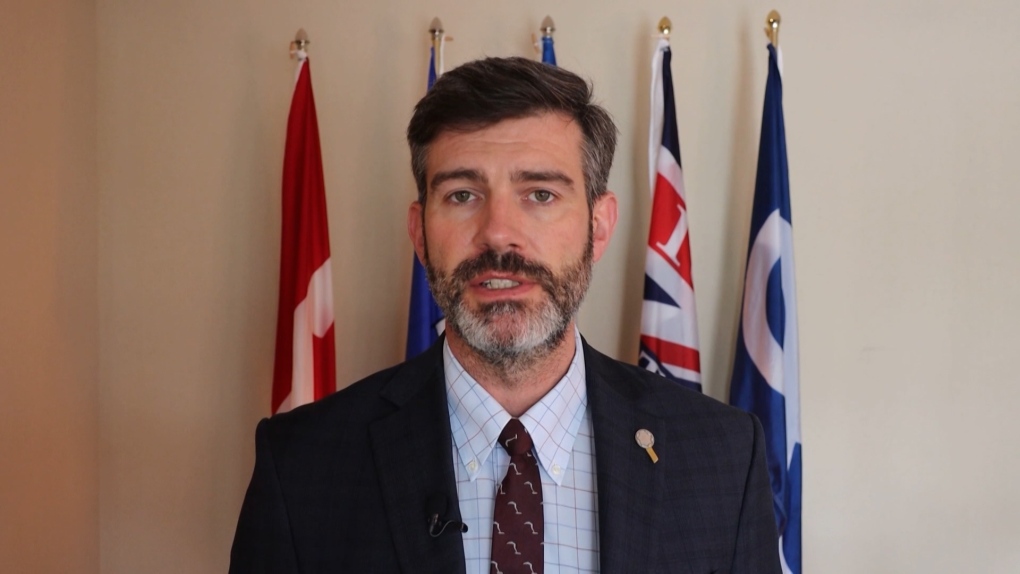 “Waiting for it to be a bad enough crisis that people will take it seriously is the sort of repeated pattern of weak leadership that we’ve seen on this in Alberta. And it’s a pattern that’s disrupted a lot of business, created a lot of heartache, put a tremendous stress on our healthcare system, and damaged our economy.”