Ottawa
intends to release plans this autumn to reduce the carbon intensity of
liquid fuel by 12% by 2030, including by requiring refiners to blend
cleaner combustibles with fossil fuels under a Clean Fuel Standard,
government and industry officials said.
The
standard aims to reduce greenhouse gas emissions by 30 million tonnes
by 2030, a critical part of Prime Minister Justin Trudeau’s green plan.
Environment Minister Jonathan Wilkinson said it represents a lifeline to
the economy as it struggles to regain momentum after lockdowns.
“This
is actually a huge economic opportunity to diversify the economy and
create a market for clean products,” Wilkinson told Reuters.
We have run out the clock with distracting debates about incremental changes. A new approach is needed.
I have spent the last year and a half writing a book, A Good War: Mobilizing Canada for the Climate Emergency, about Canada’s Second World War experience, searching for lessons for how to confront the climate crisis and quickly transition off fossil fuels.
Our wartime experience carries a helpful — and indeed hopeful — reminder that we have done this before. We mobilized in common cause across society to confront an existential threat. And in doing so, we retooled our entire economy in a few short years.
But to execute a successful battle, we need a plan. Here then are seven key strategic lessons that emerge from our Second World War mobilization.
1. Adopt an emergency mindset
When we approach a crisis by naming the emergency and the need for wartime-scale action, it creates a new sense of shared purpose. It renews unity across Canada’s confederation, and liberates a level of political action that previously seemed impossible.
Economic ideas once deemed off-limits are newly considered. And we become collectively willing to see our governments adopt mandatory policies, replacing voluntary measures that merely incentivize and encourage change with clear timelines and regulatory fiat to drive change.
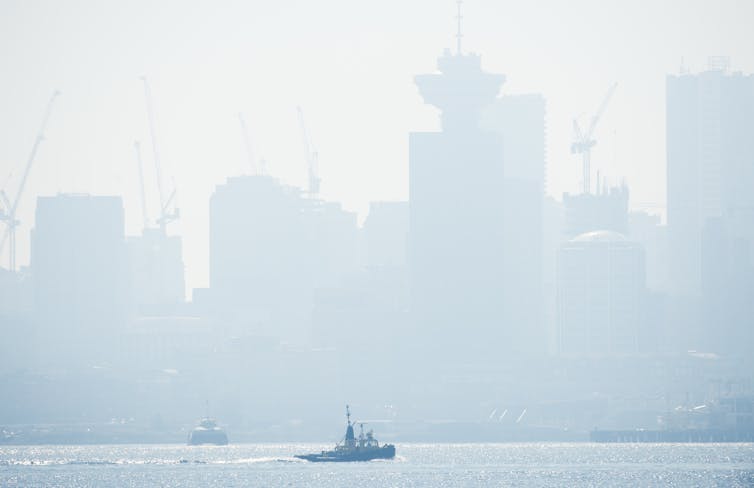
Metro Vancouver issued an air quality advisory on Sept. 8, 2020, due to the smoke from wildfires burning south of the U.S. border. THE CANADIAN PRESS/Jonathan Hayward
2. Rally the public at every turn
Many assume that at the outbreak of the Second World War everyone understood the threat and was ready to rally. But that was not so.
It took leadership to mobilize the public. In frequency and tone, in words and in action, the climate mobilization needs to look and sound and feel like an emergency.
A successful mobilization requires that people across class, race and gender share a common cause. The public must have confidence that the rich, middle- and modest-income people are all making sacrifices.
Such measures are needed again today. Moreover, a 2019 survey of 2,000 Canadians shows that when ambitious climate action is linked to tackling inequality, support goes dramatically up.
4. Create the economic institutions to get the job done
The Canadian government (under the leadership of cabinet minister C.D. Howe) established 28 Crown corporations to meet the supply and munitions requirements of the war effort. The private sector had a key role to play in that economic transition, but vitally, it was not allowed to determine the allocation of scarce resources. In a time of emergency, we don’t leave such decisions to the market.
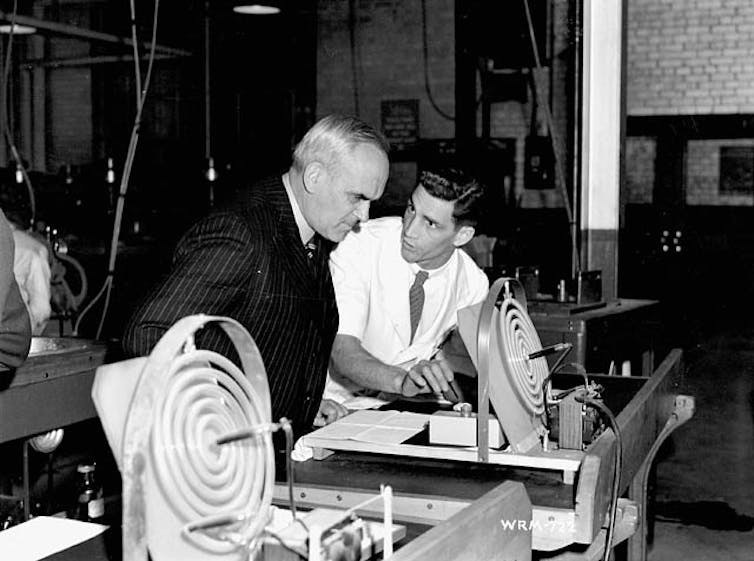
C.D. Howe watches a scientist test the curve of a lens. (National Film Board of Canada. Photothèque. Library and Archives Canada), CC BY
Howe’s department undertook detailed economic planning to ensure wartime production was prioritized, conducting a national inventory of wartime supply needs and production capacity and coordinating the supply chains of all core war production inputs (machine tools, rubber, metals, timber, coal, oil and more).
The climate emergency demands a similar approach. We must again conduct an inventory of conversion needs, determining how many heat pumps, solar arrays, wind farms, electric buses, etc., we will need to electrify virtually everything and end our reliance on fossil fuels. And we will need a new generation of Crown corporations to then ensure those items are manufactured and deployed at the requisite scale.
5. Spend what it takes to win
A poster from the Second World War. (Library and Archives Canada, C-091436), CC BY
A benefit of an emergency mentality is that it forces governments out of an austerity mindset and liberates the public purse. This year, in response to the COVID-19 pandemic, Canada’s federal debt-to-GDP ratio will rise to about 50 per cent. At the end of the Second World War, it was 108 per cent.
As mainstream politicians dither on meaningful and coherent climate action, the assertion of Indigenous title and rights is slowing and blocking new fossil fuel projects. Some of Canada’s most inspiring renewable energy projects are also happening under First Nations’ leadership. It is imperative to both honour and support such efforts.
7. Leave no one behind
The Second World War saw over one million Canadians enlist in military service and even more employed in munitions production (far more than are employed in the fossil fuel industry today). After the war, they were all reintegrated into a peacetime economy, including income support to housing to post-secondary training for returning soldiers.
The ambition of these initiatives provides a model for what a just transition can look like today for all workers whose economic and employment security is currently tied to the fossil fuel economy, with a special focus on those provinces and regions most reliant on oil and gas production.
As I read the latest scientific warnings, I’m afraid. I feel deep anxiety about the state of the world we are leaving to our children and beyond. In truth, we don’t know if we will win this fight. But it is worth recalling that those who rallied in the face of fascism 80 years ago likewise didn’t know if they would win.
During the war’s early years, the outcome was far from certain. Yet that generation rallied and surprised themselves by what they could achieve. That’s the spirit we need today.
“Protecting
more forests from industrial activity will help mitigate against the
effects of climate change,” said ASF President Bill Taylor. “Having more
mature, mixed tree cover throughout our treasured watersheds will help
keep rivers and lakes cool, giving fish and wildlife the space needed to
thrive and adapt.”
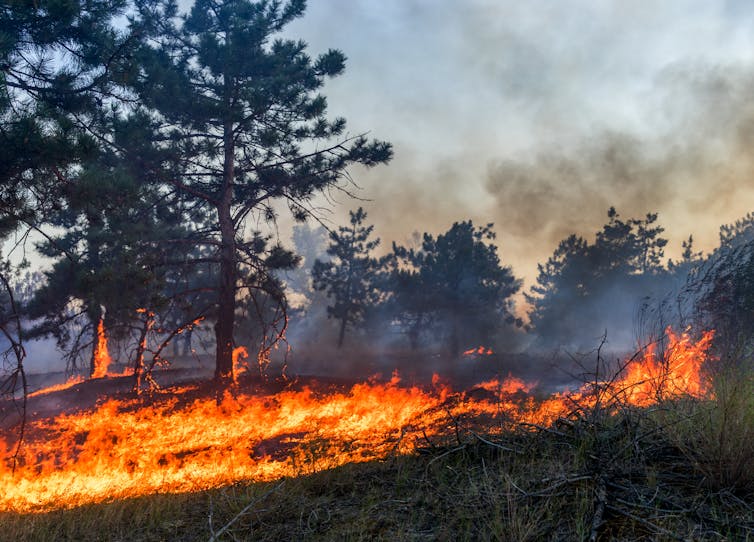
It was a grim record. On June 20 2020, the mercury reached 38°C in Verkhoyansk, Siberia – the hottest it’s ever been in the Arctic in recorded history. With the heatwaves came fire, and by the start of August around 600 individual fires were being detected every day. By early September, parts of the Siberian Arctic had been burning since the second week of June.
CO₂ emissions from these fires increased by more than a third compared to 2019, according to scientists at the Copernicus Atmosphere Monitoring Service. The wildfires produced an estimated 244 megatons of CO₂ between January and August, releasing thousands of years’ worth of stored carbon.
The summer of 2019 was already a record breaker for temperatures and fires across the Arctic. Seeing these events unfold again in 2020 – on an even larger scale – has the scientific community worried. What does it all mean for the Arctic, climate change and the rest of the world?
Sooner than predicted?
Even with climate change, the severe summer heatwave of 2020 was expected to occur, on average, less than once every 130 years. Wildfire observations in the Arctic are fairly limited prior to the mid-1990s, but there is no evidence of similarly extreme fires in the years before routine monitoring started.
Higher temperatures globally are likely to be driving the increase in wildfire frequency and duration. But modelling wildfires is difficult. Climate models don’t predict wildfires, and they cannot indicate when future extreme events will occur year-on-year. Instead, climate modellers focus on whether they are able to predict the right conditions for events like wildfires, such as high temperatures and strong winds.
And these climate model projections show that the kind of extreme summer temperatures we’ve seen in the Arctic in 2020 weren’t likely to occur until the mid-21st century, exceeding predictions by decades.
So even though an increasing trend of high temperatures and conditions suitable for wildfires are predicted in climate models, it’s alarming that these fires are so severe, have occurred in the same region two years in a row, and were caused by conditions which weren’t expected until further in the future.
So what is causing this rapid change? Over recent decades, temperatures in the most northerly reaches of Earth have been increasing at a faster rate than the rest of the world, with the polar region heating at more than twice the rate of the global average.
The fires caused by these hot, dry conditions are occurring in remote and sparsely populated forests, tundra and peat bogs, where there is ample fuel.
But these extreme events are also providing worrying evidence of climate “feedback loops”, which were predicted to happen as the climate warms. This is where increasing concentrations of greenhouse gases in the atmosphere contribute to further warming by promoting events – like wildfires – which release even more greenhouse gas, creating a self-perpetuating process that accelerates climate change.
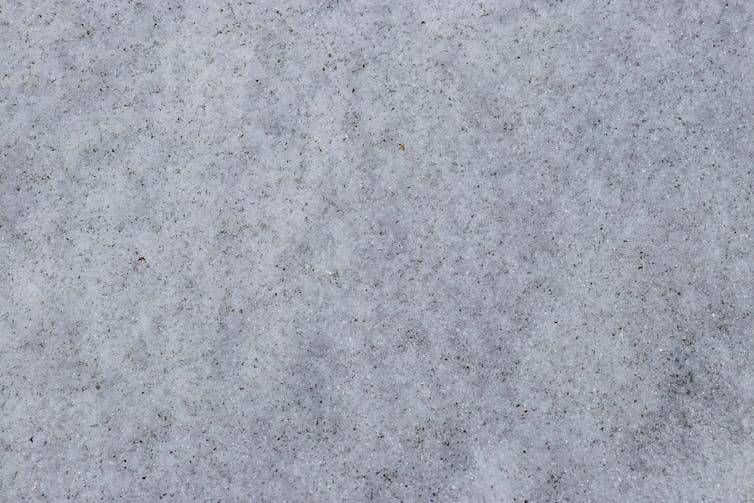
Record CO₂ emissions released from burning Arctic forests during the summer of 2020 will make future conditions even warmer. But ash and other particulates from the wildfires will eventually settle on the ice and snow, making them darker and accelerating their melting by reducing how easily their surface reflects sunlight.
Climate change is not the direct cause of this summer’s fires, but it is helping to create the right conditions for them. The extreme temperatures and wildfires seen throughout the Arctic in 2020 would have been almost impossible without the influence of human-induced climate change – and they are feeding themselves.
When we think of the Arctic, we don’t tend to picture wildfires and heatwaves – we think of snow and ice and long, brutal winters. Yet the region is changing before our eyes. It’s too early to say whether the last two summers represent a permanent step-change, or new “fire regime”, for the Arctic. Only observations over a much longer timescale could confirm this.
But these record-breaking events in the Arctic are being fuelled by human influences that are changing our world’s climate sooner than many expected. With climate models predicting a future where already hot and fire-prone areas are likely to become more so, 2020’s record temperatures paint a worrying trend towards more of the same.
The Arctic is at the frontline of climate change. What we are witnessing here first are some of the most rapid and intense effects of climate change. While the impact is devastating – record CO₂ emissions, damaged forests and soils, melting permafrost – these events may prove to be a portent of things to come for the rest of the world.
The federal natural resources department has been working with industry and different levels of government for the last three years on the project.
The strategy is expected to lean into the strengths Canada already possesses, including low-carbon intensive electricity, like hydro, and ample fossil fuel reserves, according to background documents provided by the federal government.
Alberta has been working with Ottawa on the national strategy and is developing its own blueprint.
Hydrogen in Alberta is traditionally made from natural gas, but the province believes it can become a leader in cleaner “blue” hydrogen by introducing carbon-capture-and-storage technology to the process.
“By 2050, [hydrogen] is going to be a $2.5-trillion industry,” said Dale Nally, Alberta’s associate minister of natural gas, citing global hydrogen industry figures. “We need to keep advancing this sector.”