In what will be the third provincial election held in Canada during the COVID-19 pandemic — the others were in New Brunswick on Sept. 14 and British Columbia on Saturday — 61,225 Saskatchewan residents have received mail ballots.
Ballots sent by mail will only begin to be counted on Wednesday. In tightly fought ridings, the margins may be too narrow to decide the race without accounting for the mail ballot results.
For those casting a ballot in-person on Monday, Elections Saskatchewan is strongly recommending that voters wear a mask at the polls and stay home if feeling unwell.
This is the fourth-consecutive election that the Saskatchewan Party has won. The full election results won’t be known until Nov. 7 when the mail-in ballots have been counted.
The party was first elected in 2007 with Brad Wall as leader after 16 years of NDP rule. In two successive elections since then — 2011 and 2016 — the Saskatchewan Party consolidated its hold on power, increasing its seat count in both elections.
The Saskatchewan Party held 46 seats when the election was called, with the NDP at 13 and two seats vacant. [Read more]
Seems as one Conservative gets voted out, another one takes his place. This will be the year that defines Premier Scott Moe. As a big supporter of oil & gas, and Jason Kenney too, things are apt to get a little rocky on the environmental front.
In Canada and around the world, a growing number of investors are rushing for the exits in their haste to abandon a crashing fossil fuel industry.
In stories published in just the last four days, BNN Bloomberg points to five leading Canadian fossils that have lost nearly $100 billion in share value over the last five years, while the Institute for Energy Economics and Financial Analysis (IEEFA) lists 50 “globally significant financial institutions” that have restricted their involvement with tar sands/oil sands projects, Arctic oil and gas drilling, or both, including 23 so far this year. And CBC foresees steadily increased hardship for laid-off fossil workers looking for new jobs in the sector.
“Over 140 global financial institutions have already restricted thermal coal financing, insurance, and/or investment and we are now seeing a similar accelerating shift of capital away from oil and gas exploration, starting with high-risk oil sands development and drilling in the Arctic,” said Tim Buckley, IEEFA director of energy finance studies. The increased global momentum “means we expect a continuation of new announcements from other financial institutions seeking to better manage increasing climate risk.”
At this point, most of us know the drill when it comes to COVID-19: proper hand hygiene, mask wearing and social distancing.
But does setting fire to cell towers make your list? Probably not. A conspiracy theory linking 5G mobile technology to the COVID-19 outbreak has ignited fears worldwide, prompting just this response from a few individuals in Québec, who set ablaze seven mobile towers.
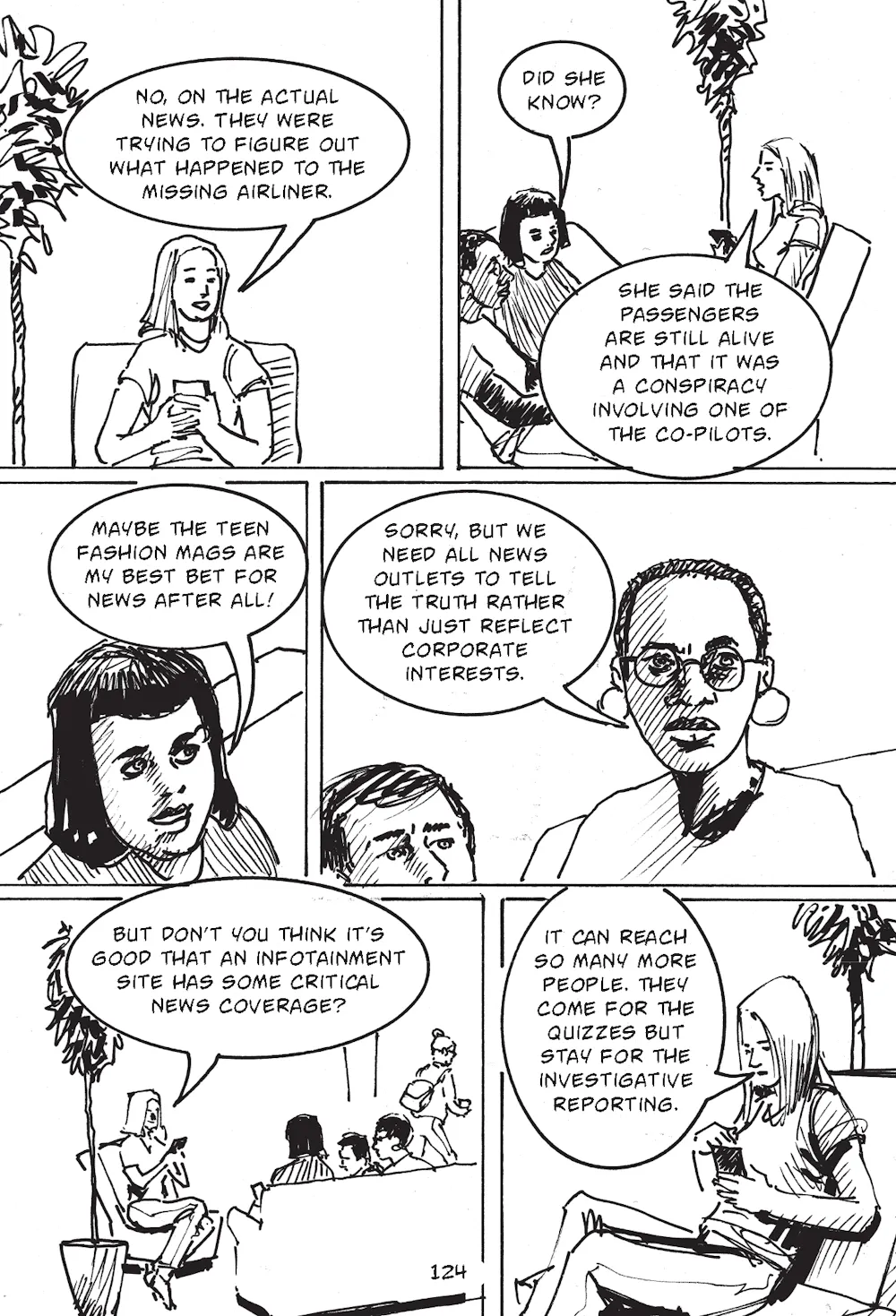
My research focuses on critical media studies and ideological representations in news and popular culture. I regularly offer workshops to schools and community groups that engage the public in contemporary media literacy issues. My book, Won’t Get Fooled Again: A Graphic Guide To Fake News, helps readers identify the underlying purpose of the messages they receive and learn how to do basic research before accepting the validity of what’s being presented to them.
As consumers, we need to learn how to filter content and become our own educators, editors and fact-checkers to ensure the information we act upon is trustworthy. In a constantly changing informational and political environment, it’s no wonder we often struggle to separate fact from fiction.
Research indicates people create misinformation for two primary reasons: money and ideology.
Articles, videos and other forms of content can generate large amounts of money for the websites that host these pieces. Most of their income comes from clicks on advertisements, so the more people who visit their sites, the better chances they have of boosting ad revenue. This feedback loop has led many publishers to lean on false information to drive traffic.
The threshold for making believable fake news has fallen as well. A conspiracy theorist, for example, can create a web page using a professional template with high-quality photos in just a few clicks. Once the content has been added, sharing it on Facebook, Twitter, Instagram and other platforms requires even less effort.
Focus groups with students informed the content for ‘Won’t Get Fooled Again,’ a graphic narrative teaching media literacy. (Alan Spinney), Author provided
Dubious and inflammatory content can undermine the quality of public debate, promote misconceptions, foster greater hostility toward political opponents and corrode trust in government and journalism.
Aside from a few social media platforms that identify misleading content and provide a brief explanation, most information online or in print can appear factual. So how can we figure out which sources to trust?
As a sociologist who focuses on critical media studies, I formed focus groups and collected input from my students to create a resources to guide readers through identifying fake news. While regulation and legislation are part of the solution, experts agree we must take swift action to teach students how to seek verification before acting on fake news.
In my findings, students identified several reasons why media outlets post or re-publish fake news, including making mistakes, being short-staffed, not fact-checking and actively seeking greater viewership by posting fake news.
The students pointed to holistic media literacy and critical thinking training as the best responses. This finding runs counter to the tactics currently used by publishers and tech companies to label or “fact-check” disputed news.
One student summarized this mindset best: “As citizens and consumers, we have a responsibility to be critical. Don’t accept stories blindly. Hold those in power responsible for their actions!”
Getting multiple perspectives is a great way to expand our digest of viewpoints. Once we can see a story from more than one angle, separating truth from falsehood becomes much simpler.
At this point, I transitioned from recording perceptions of fake news to determining how to identify it. Providing students with information about the nature and agendas of fake news, in an immersive format, seemed to be a key step in engaging and cultivating their critical literacy capabilities. Information delivery was a key consideration.
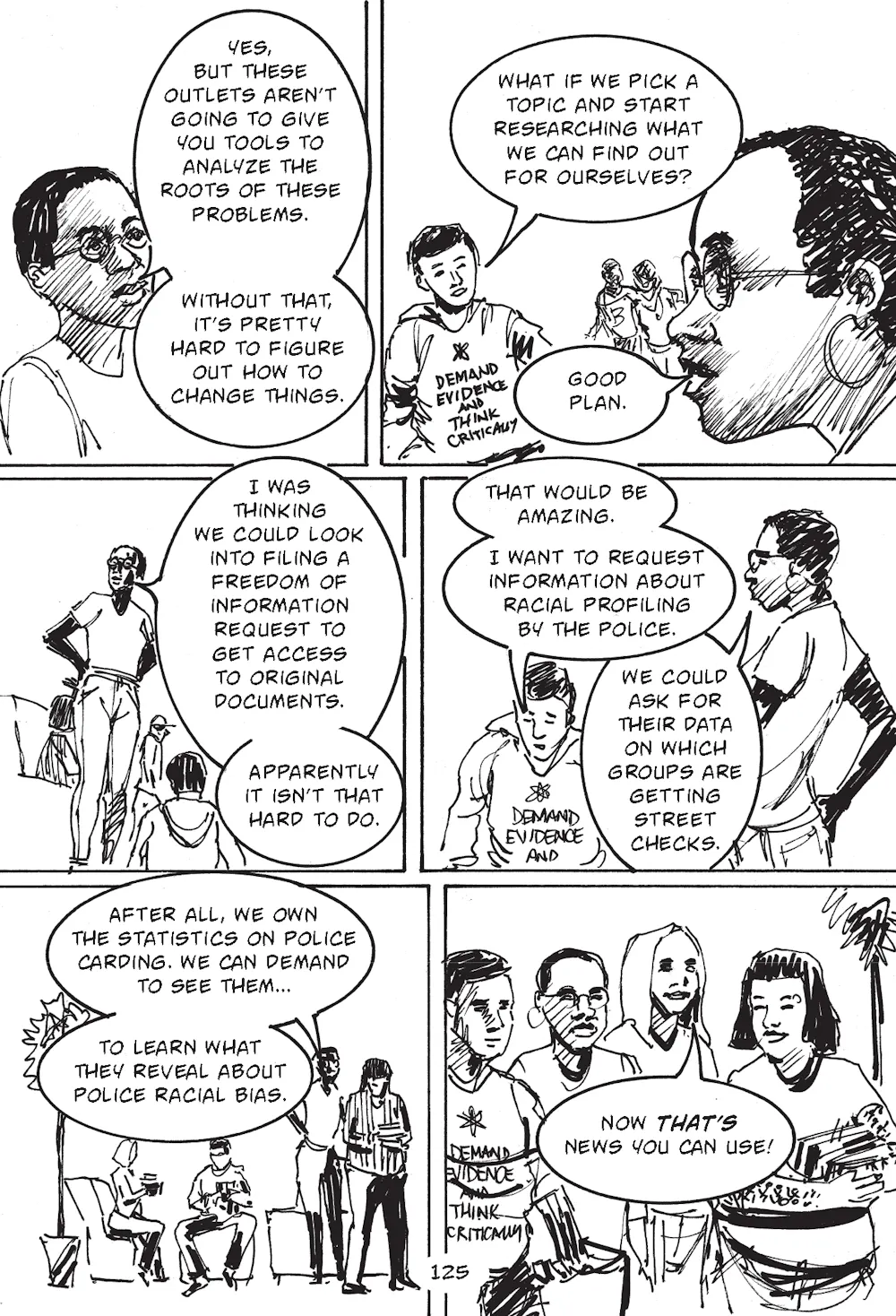
Graphic narratives can help communicate complex and multiple ideas at the same time, such as research skills and mcivic rights. (Alan Spinney), Author provided
A major goal of my book involves unpacking the motivations behind the news we consume. Consider why a particular person was interviewed: Who do they represent? What do they want us to believe? Is another point of view missing?
Won’t Get Fooled Again: A Graphic Guide to Fake News is the culmination of my research and the insights drawn from media literacy scholarship. This guide helps readers understand what fake news is, where it comes from, and how to check its accuracy.
If there’s one habit my students and I hope everyone will develop, it’s this: pause before sharing news on social media. Double-check anything that immediately sparks anger or frustration and, remember, fake news creators want a reaction, not thoughtful reflection.
Erin O’Toole has been the Conservative Party leader of Canada since August 24, 2020. Like his predecessor before him, he lacks any significant climate change plan. He feels the strength of the party lies in Ontario and Alberta, so he’s hesitant to suggest plans that would be unfavourable to his base. Economic recovery from the pandemic isn’t nuclear power or Liquefied natural Gas (LNG) as he would suggest.
Since former Prime Minister Stephen Harper stepped down, a blue funk hangs over the Conservatives’ heads. They lack direction and ambition. For that matter, the former party leader, Andrew Scheer’s only plan was to nip at Trudeau’s heels whenever he made a move. He never came up with a concrete rebuttal on any topic other than to say it wouldn’t work, and the reason why, was lacking credibility, if any reason was given.
Even his support for LNG seems to be getting him off on the wrong foot. It was proposed as an alternative to coal but his biggest supporter, Premier Jason Kenney of the Alberta United Conservatives, is ramping up dormant mines for Australian miners who hope to have a market in China and other Asian countries. To be fair, he can push LNG, but he’ll have to button his lip about coal. The Grassy Mountain Coal Project Public Hearings are set to begin on October 27, 2020. It will be interesting for both Kenney and O’Toole, to see which way it goes.
He’s been prompting Prime Minister Justin Trudeau to create a parliamentary committee to probe the Liberal government’s pandemic response spending and possible ethical lapses including WE. Trudeau, obviously annoyed as there are more important matters to contend with, has suggested that this motion is a confidence matter. If the Conservatives persist, he will call an election.
Canadians can’t trust Justin Trudeau.
He has one set of rules for Liberals insiders and another for everyday Canadians.
The Commons’ ethics committee has also been asking for more information about the money he and his family received as speaker fees from the charity organisation.
Bloc Québécois Leader Yves-François Blanchet supports the Conservative’s motion. He’s ready for an election as well. NDP Leader Jagmeet Singh feels this is a waste of time, and rightly so. There are several issues much more pressing.
Let it be known, how foolish O’Toole is for pushing this motion. If he were elected prime minister, he might make Andrew Scheer, the former Conservative party leader, look much more competent in his performance.
Update 10/21/20 — Snap election averted as Liberal government survives confidence vote in Commons
Canadians will not be heading to the polls for a snap fall election now that the Liberal government has survived a confidence vote on a Conservative motion to create a special committee to probe the government’s ethics and pandemic spending.
MPs voted 180-146 to defeat the opposition motion, with the NDP, Greens and Independent MPs voting with the Liberals. [Read more]
Update 10/22/20 — New Conservative motion could trigger 2nd confidence vote for Liberals
One day after surviving a confidence vote on a Conservative motion, Justin Trudeau’s minority Liberal government faces another Conservative motion that could trigger yet more high-stakes drama over the possibility of a snap election in the midst of the COVID-19 pandemic.
The official Opposition is using its second opposition day this week to debate a motion calling for a sweeping probe by the House of Commons health committee into a host of issues relating to the government’s handling of the COVID-19 pandemic.
The motion is so broad and the demand for documents so massive that the Liberals are expected to argue that its passage would paralyze the government — the same argument used to declare the first Conservative motion a confidence matter.
Using an argument that’s likely to be repeated by government members Thursday, Liberal MP Darren Fisher told the committee that “the motion asks public health officials basically to stop what they’re doing to protect Canadians and sift through emails and documents instead.” [Read more]
Neoliberal globalization has opened the doors for the savage exploitation of the world by the big economic powers. Megaprojects, agribusiness and militarization, among other processes, express a patriarchal, neoliberal and racist system that amounts to an assault on life as such. As a result, peoples’ rights have been systematically violated, the Earth and its resources destroyed, pillaged and contaminated, while corporations continue committing economic and ecological crimes with total impunity. They also throw us into an environmental and climate crisis of unknown proportions, for which they do not take responsibility.
 In what will be the third provincial election held in Canada during the COVID-19 pandemic — the others were in New Brunswick on Sept. 14 and British Columbia on Saturday — 61,225 Saskatchewan residents have received mail ballots.
 This is the fourth-consecutive election that the Saskatchewan Party has won. The full election results won’t be known until Nov. 7 when the mail-in ballots have been counted.